IPE/BC is an independent, non-partisan organization, however we recognize that IPE/BC Associates and guest authors hold a range of views and interests relative to public schools, education issues, and the political landscape in BC. Perspectives is an opportunity for Associates and others to share their ideas in short, accessible essays.
B.C.’s School Boards matter, but only if they act like it
December 14, 2025
By Patti Bacchus
With elected school boards under threat in Ontario, it is more important than ever for B.C.’s boards to demonstrate their relevance by engaging meaningfully with their communities and stakeholders.
Elected school boards are already gone in Nova Scotia, Quebec (where francophone boards were replaced, though anglophone boards remain), and Newfoundland and Labrador. Their elimination is part of a troubling trend toward increasingly centralized control of public education.
 In British Columbia, Education Minister Lisa Beare flexed her ministerial muscles shortly after her appointment by firing the elected Greater Victoria School Board and replacing it with a sole administrator. The board’s offence? Ending its police officer liaison program — a decision made after a lengthy public consultation and formal decision-making process, but one the minister appears to have disagreed with nonetheless.
I firmly believe that locally elected school boards are essential to a strong public education system — but only if trustees understand their governance role and lead collaboratively, transparently, and with authentic community engagement.
Unfortunately, I’ve seen that commitment erode in my own district, Vancouver. The Vancouver School Board now bars the public from attending standing committee meetings, upending decades of practice. It’s unclear what problem this change is meant to solve — the meetings are already livestreamed. Perhaps some trustees are simply uncomfortable with members of the public sharing the same physical space. The board has even begun forbidding photography and recordings during public meetings, another break from long-standing norms. For what purpose?
As the Vancouver School Board’s longest-serving chair, and as a former DPAC representative, I know how critical open committee meetings are to meaningful engagement and community-building.
But this isn’t about me. It’s about the survival of local democracy—and convincing the public that elected school boards are worth keeping. That case becomes very hard to make when people are made to feel unwelcome in meeting rooms, or are scolded or threatened for something as innocuous as taking a photo at a public meeting.
Even registering to speak to trustees has become a convoluted, bureaucracy-laden process that could be — and was — far simpler. What is the point of locally elected trustees if they go out of their way to make it difficult for the very people they serve to engage with them?
This problem isn’t unique to Vancouver or even to B.C. In The State of the System: A Reality Check on Canada’s Schools, Nova Scotia education writer and commentator Paul Bennett examines the evolution of school governance across Canada. He argues that “our public schools, initially established as the vanguard of universal, accessible, free education, have lost their way and become largely unresponsive to the public they still claim to serve.”
I don’t always agree with Bennett, but on this point he’s right in some cases.
Later in the book, Bennett observes that trustees are often treated as though they should “behave much like children in grade school, focus narrowly on policy, avoid administrative matters, keep their distance from local groups, respect rigid board solidarity, and act primarily as goodwill ambassadors.” This culture, he argues, cuts boards off from the communities they are meant to represent — and he identifies it as one of the factors that led to the elimination of elected trustees in Nova Scotia.
We should learn from that.
 I frequently hear from newly elected trustees that they’ve been advised by senior management or their provincial organization not to speak to the media or engage with the public on social media. Good grief. What is the point of local government if local elected officials are discouraged from talking to the locals?
As an education columnist, I regularly contacted individual trustees for comment. Some told me they were “not allowed” to speak to journalists, because only the chair could do so. While it’s true that chairs speak on behalf of boards, individual trustees are also elected officials. They can— and should —speak publicly, provided they are clear they are not speaking for the board. Accountability demands open communication.
New trustees are also warned not to meet with community groups or individuals — especially union representatives — unless the entire board is present. That’s pure balderdash. The very purpose of local government is local contact. This siege mentality frustrates the public and, over time, risks breeding public indifference — making it far easier for governments to abolish school boards altogether with minimal public pushback.
Make the Most of a Whittled-Down Role
I served as a school trustee for eight years, without regrets. I worked with a strong caucus, and together we accomplished important work. We held the public’s ground against relentless pressure to close schools and sell valuable public land. We successfully negotiated hundreds of millions of dollars for new schools and seismic upgrades.
We developed a model for incorporating purpose-built childcare centres into new and rebuilt schools. We launched a Mandarin bilingual program, opened an Indigenous-focused school, and expanded early literacy intervention.
Yes, the trustee role is diminished from what it once was. Trustees can no longer levy taxes, and most collective bargaining now happens provincially. Still, I believe passionately that school boards can — and should — be among our most democratic institutions, precisely because they are closest to local values and concerns.
Outside of small-town city councils, there are few places where grassroots movements should be able to have more influence than at a local school board.
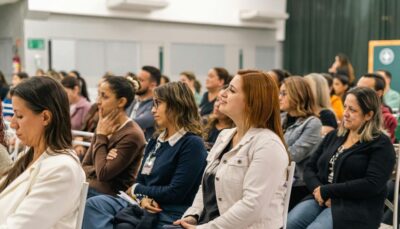 Vibrant, effective boards, where debate is encouraged, all voices are heard, and access to trustees is open, are a vital component of a high-functioning public education system. By most measures, Canada’s public schools are remarkably successful, delivering strong outcomes for the public investment they receive. Do school boards contribute to that success? I believe they do, at least in some cases.
Yet many B.C. school boards are moving in the opposite direction. Restrictive codes of conduct muzzle trustees. Barriers discourage public participation. Boards increasingly take direction from management, rather than exercising independent governance. Too much of the public’s business— because school board business is the public’s business —takes place behind closed doors or in private emails instead of in public meetings, where it belongs.
B.C. school boards need to give themselves a hard shake. They must decide whether they want to do the hard but essential work of transparently representing the public — or continue fussing over decorum and control as they inch toward irrelevance.
I hope they choose the former. I fear many will continue with the latter, and we will all be poorer for it — especially students.
School board elections are next fall. Ask candidates to commit to open meetings with open public galleries, and to making public participation easy, not burdensome. Ask whether they understand how to use the trustee role to improve educational opportunities for all students — not simply to rubber-stamp management recommendations.
If you don’t want to listen to the public, or keep communication open, accessible, and respectful, then running for school trustee may not be for you.
School boards matter. Strong public schools depend on them. Don’t squander them by electing ineffective—or inaccessible—trustees.
Patti Bacchus is a former education columnist and is the Vancouver School Board’s longest-serving chair (2008-2014). She sits on the board of the Institute for Public Education (BC).