Investing our hopes and dreams in public education
September 15, 2026
by David Chudnovsky
When I first became a public education advocate in the late 1960s, we spent a lot of time talking and thinking about what schools could and should be like. Some of our ideas were progressive and thoughtful and even transformational. And admittedly, some of them were a bit goofy. Still, much of our energy was spent dreaming about making the very best principles of public education real in our schools every day.
Since then, it seems as if we’ve been permanently on the defensive – desperately clinging to structures and processes we had once criticized – because the alternatives being proposed were so much worse. As a result, we don’t often have the time or opportunity to discuss, debate, or engage with each other about the future of public education. We’re usually caught up with immediate issues — whether the excitement and fulfillment of a project, assignment or learning process, or a critical analysis, protest or condemnation of an ongoing weakness or problem. But shouldn’t we be talking about these issues, imagining and planning for a future that meets the educational needs of every child — articulating and sharing our hopes and dreams?
Over the past two years, the Institute for Public Education/BC facilitated a community-based discussion we called “Our Hopes and Dreams for Public Education” to do just that. And more than 1000 British Columbians shared their thoughts, their wisdom – their hopes and dreams – with us.

Many of us are legitimately concerned about conditions faced by students, families and educators in BC’s public schools. And we express our criticisms publicly as we should. The Hopes and Dreams project, though, was unique in that it asked participants to talk about their vision for the education system they want, rather than their criticisms of the system we currently have.
This was difficult for many, especially for parents, Education Assistants, teachers and others worried about the unmet and significant needs of particular children. Initially they found it hard to “hope and dream” rather than critique the current shortcomings. But we at IPE/BC shared our belief that this positive-oriented process is just another way to advocate for public education, for our schools and for our children. In the end our participants overwhelmingly supported this chance to turn legitimate criticisms into inspirational discussion.
The project wasn’t, nor was it meant to be, a randomized survey of British Columbians. Instead, it was a participatory community engagement and consultation process — an in-depth discussion with people connected in some way with our public schools. We heard from parents, students, teachers, Education Assistants, advocates, students and instructors at faculties of education, immigrants and newcomers and many more.
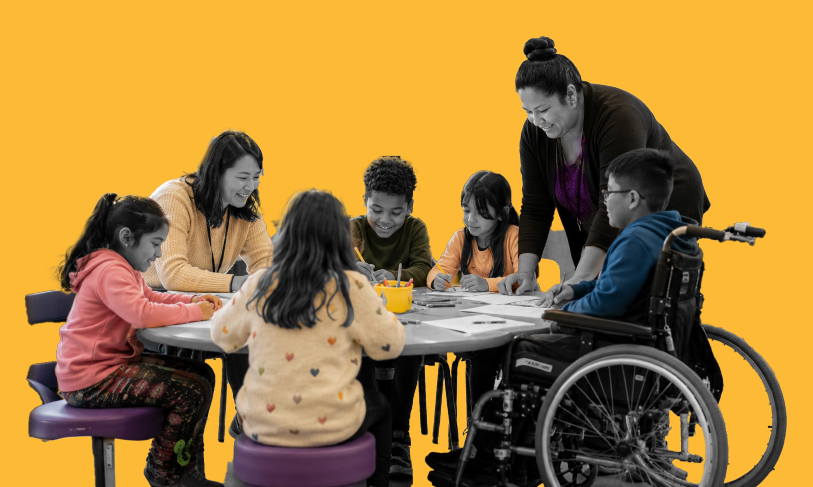
They expressed their hopes and dreams about schools where every child truly belongs; about a thriving education workforce; about schools as trusted, community-centred institutions; about funding every school for every student’s success; about Indigenous rights and de-colonizing the system – and about much more.
We invite you to read the Report, to endorse the Report, to comment and make your views known; to discuss the report with candidates for School Trustee in your community; to contact the Minister of Education and the Premier and let them know what you think.
For us at IPE/BC the results of this project were both inspiring and instructive. We see the report as simply one step in an ongoing process. If our work encourages discussion and debate about the nature of our public schools we will be very pleased. But that discussion and debate is not nearly enough. The suggestions and wisdom of those who engaged with us — who shared their hopes and dreams — should be studied and taken seriously by policy-makers at the school, school district and provincial levels. That should and must lead to change.
Public education is a bedrock of a democratic society — a fundamental mechanism of social solidarity that contributes to equity and to individual and community well-being. Let’s hope and dream together about how to make our public education system the best it can possibly be so that every one of our children can thrive.
David Chudnovsky is a member of the Board of Directors of IPE/BC and the chairperson of the IPE/BC Hopes and Dreams Committee. He taught at the nursery, elementary, secondary and university levels in England, Ontario and BC. He is a former BC MLA, past-president of the BCTF and co-author of the Charter for Public Education.